Overview
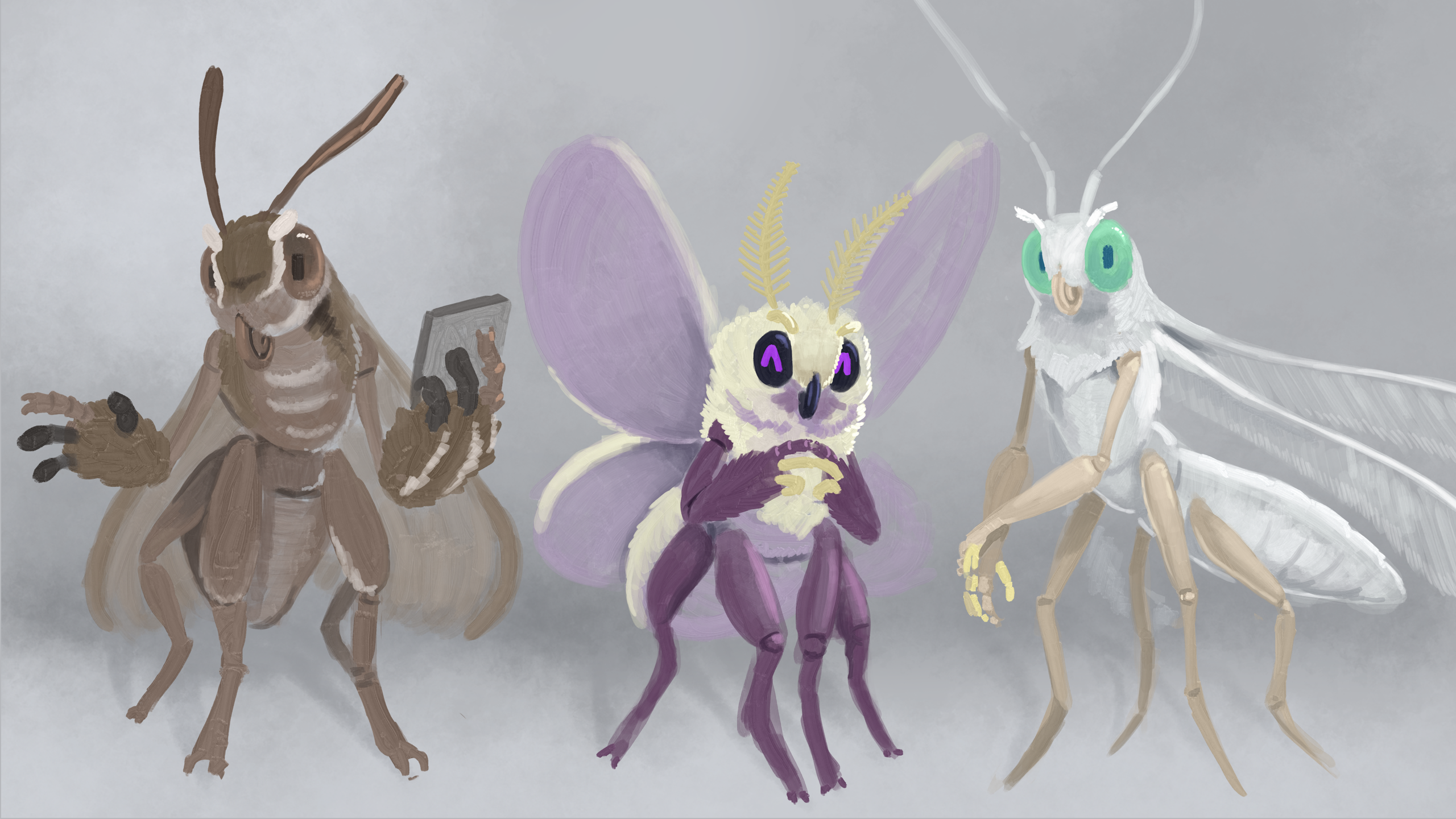
A classification including a broad group of sapient mothlike species- technically, any member of the order Technidoptera Sapiens.
They develop from larvae, and undergo metamorphosis. Due to the relative fluidity of their physiology during this phase, they take especially well to cybernetic implants, and can easily handle modifications that would be significant and intrusive for other species.
General Physiology
The core body consists of several major segments- the Head, Thorax, and Abdomen.
The upper arm, forewing, and hind wing attach high on the thorax. The foreleg attaches low on the thorax, and the hind leg attaches towards the front of the abdomen.
Technidoptera near universally feature two sets of antenna- the major set high on the head, and the minor set over the eyes. In unmodified specimens, vocalization is infeasible, and the minor antennae are used as the primary means of communication.
Cybernetics
The vast majority of Technidoptera augment their bodies with cybernetic implants during metamorphosis. This is culturally considered a standard part of the process- unmodified individuals are usually a result of extreme medical complications or logistical problems. The rare individuals who miss out on augmentation during their metamorphosis period can still undergo augmentation later in life, but they miss out on the ease of recovery, and thus, might opt for less intrusive augmentations in place of the standard set.
While many optional augmentations are availiable, the typical baseline is as follows.
- Ocular augmentation: Compound eyes are modified with a pixel display. This is typically used to show a an expressive "pupil," which can help with indicating microexpressions like eye-focus and emotes to folks who have trouble reading buglike body language.
- Hand Augmentation: Robotic digits are added to the upper extremity. The natural digit typically forms the index finger, with a mechanical thumb, middle finger, and pinkie.
- Voicebox: As biological technidoptera have no means of vocalization, a speaker system is added to the upper throat, at the base of the head. This allows them to speak.
- Direct Neural Interface: Being able to control a computer hands-free is widely convenient. Many Technidoptera choose a spot on their body for a physical plug outlet- common choices are at the back of the head, or the base of the thorax. To avoid wear and tear, the connection is designed to be extremely rugged, with a positive connection. Generally a secondary interface devise will eb attached to the direct implant, allowing for either a safe disconnect cord or a wireless interface. This means that, if the connection is damaged, it's usually an easier matter of replacing the specific interface, rather than damaging the direct neural connection.
Linguistics
Biologically, technidoptera are mute. While the vast majority opt for cybernetic voiceboxes amongst their augments, the species also maintains their native language, Technidopteran Semaphore.
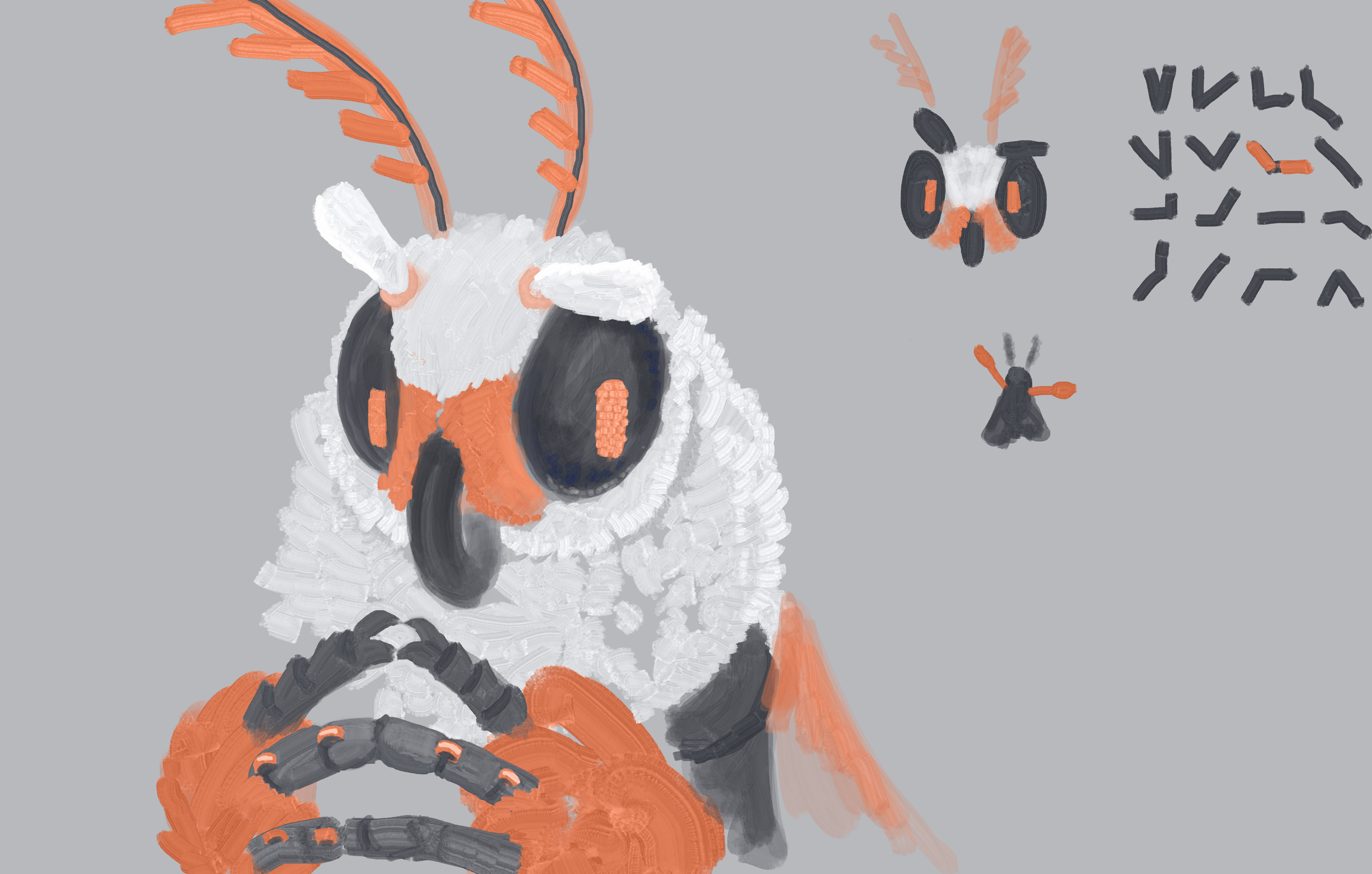
Technidoptera have specially adapted antenna above their eyes, positioned roughly like eyebrows. Dense twitch muscles allow these to be moved to new positions quickly and precisely, and the angles of the antenna together form the alphabet. At larger distances, communication can be done by waving the arms, or using flags, although this is significantly slower.
The alphabet only contains 16 characters, making it a bit less information dense than many other languages when written. This is offset through generally longer words, and via the extremely fast rate of movement. One of the reasons the language has survived is that it is generally faster than speaking, between technidoptera. However, non-native speakers often struggle to follow it at full speed, not just as a matter of familiarity, but as a matter of visual perception.